As California continues to be subjected to catastrophic climate change-induced weather events, many species are in need of help – including marine snails.
When most people think of endangered species, they likely imagine an exotic animal in a remote jungle. Wendy Bragg however, thinks about black abalone, a marine snail found along the coast of California.
I first met Bragg, a marine ecologist and Ph.D. student from the University of California, Santa Cruz in November 2020, while on an abalone reconnaissance mission in Big Sur. I was invited along due to my experience working with these endangered marine snails and joined up with the team for a few days at a remote field station. On paper, the mission was simple: find as many abalone as possible and document the locations with measurements and photos. In reality, the mission was far more complex, and the clock was ticking with a large northwest swell on the way which would make our surveys impossible.
Regions of the central California coastline are difficult or impossible to access due to steep cliffs and rough terrain. Unfortunately, the marine snails we were looking for, the black abalone (Haliotis cracherodii), were located at the bottom of these cliffs. The intertidal environments black abalone call home are unique habitats where the land meets the sea. They are considered harsh environments occupied by hardy, highly adapted organisms that can withstand everything from desiccation by the beating sun during low tides to the pummelling waves of large winter storms.
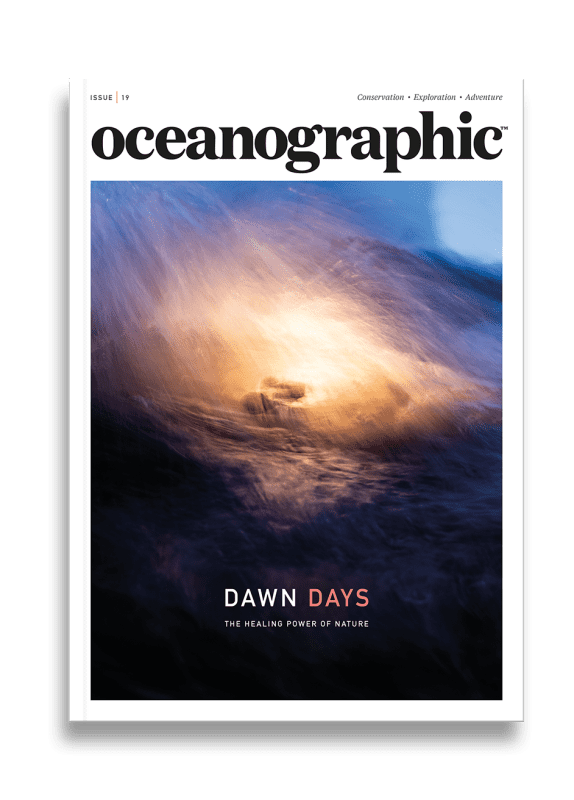

This feature appears in ISSUE 19: Dawn Days of Oceanographic Magazine
The clock was ticking with a large northwest swell on the way.
Continue reading
This story is exclusively for Oceanographic subscribers.
